
Unlocking Your Genetic Blueprint: A Complete Guide to DNA Testing
Have you ever wondered why you have your father’s smile or your grandmother’s laugh? Perhaps you’ve been curious about your ancient ancestors and the incredible journeys they undertook hundreds or thousands of years ago. These questions, once the exclusive domain of family stories and historical records, can now be explored with stunning scientific precision.
The key to unlocking these personal mysteries lies within your DNA, the unique biological instruction manual you carry in nearly every cell of your body. Modern science has given us the remarkable ability to read parts of this complex manual through the rapidly evolving field of DNA testing. This technology has blossomed from a tool used only in specialized research labs into something accessible to millions of people right from their homes.
This newfound access offers profound insights into everything from our deep heritage to our predispositions for certain health conditions. Understanding this technology is the first step toward harnessing its power. This guide will walk you through what these tests can truly reveal, the different types available, and how you can use this knowledge to empower your personal wellness and longevity journey.
What Exactly is DNA and Why Does it Matter?
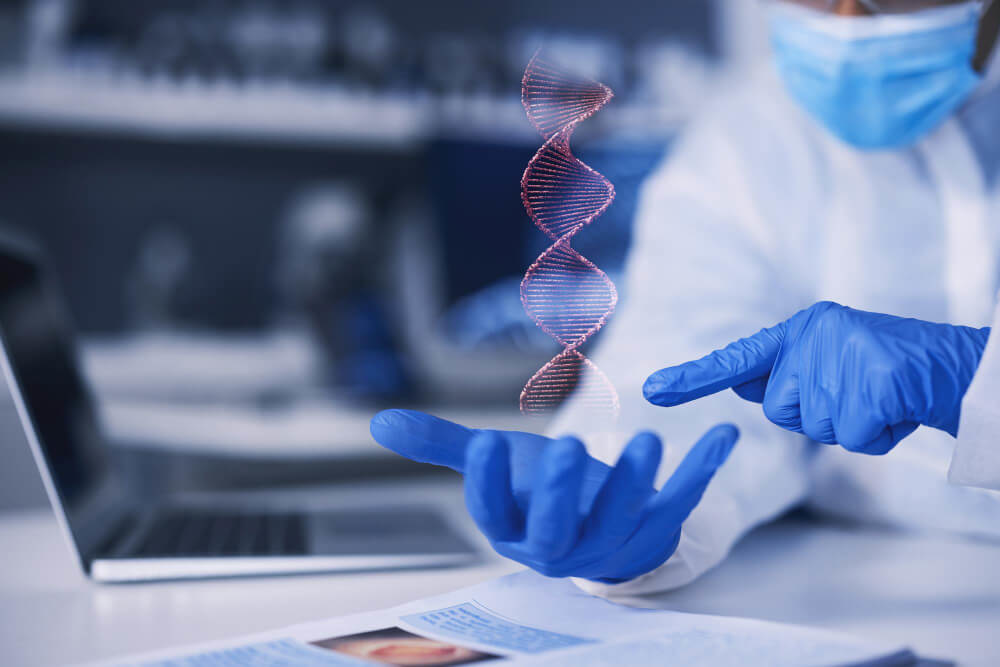
To appreciate what a DNA test does, it helps to understand what it’s looking at. Think of your body as a massive, bustling city. The instructions for building and running this entire city are stored in a central library, which is the nucleus inside each of your cells. Inside that library are 46 books, called chromosomes.
Each of these books contains thousands of chapters, which are your genes. Genes are the specific instructions, or ‘recipes’, for building everything your body needs to function, primarily proteins. The words and letters that make up these chapters are your DNA code, a long sequence of four chemical bases: adenine (A), guanine (G), cytosine (C), and thymine (T).
Your entire genetic code, or genome, contains about 3 billion of these letters. While the vast majority of this code is identical from person to person, tiny variations exist that make each of us unique. These small differences, often just a single letter change, are called single nucleotide polymorphisms, or SNPs (pronounced ‘snips’).
These SNPs are not typically ‘good’ or ‘bad’. They are simply variations that account for the rich diversity of human life. They influence your hair color, your height, your blood type, and countless other traits. They can also subtly affect how your body processes nutrients, responds to exercise, and even its predisposition to certain health challenges.

What Can You Learn From a DNA Test?
A single DNA test can open up several avenues of discovery, providing a snapshot of your genetic inheritance. The information you receive generally falls into three main categories: ancestry, health risks, and wellness traits. Each offers a different lens through which to view yourself.

Can it reveal your ancestry?
This is often the most popular reason people take a DNA test. By analyzing your unique genetic markers and comparing them to vast databases of reference populations from around the world, these tests can provide an ethnicity estimate. This breakdown shows what percentage of your DNA appears to originate from different global regions.
Beyond a percentage chart, these services can often connect you with living relatives who have also taken a test and opted into a matching database. This ‘DNA relative finder’ feature has been responsible for reuniting families and helping people build out their family trees in ways that were previously impossible, connecting branches across continents and generations.

Can it predict your health risks?
This is arguably the most powerful and sensitive information a DNA test can provide. Certain genetic variations are known to be associated with an increased risk for specific health conditions. For example, tests can screen for variants in the BRCA1 and BRCA2 genes, which are linked to a higher risk of breast, ovarian, and other cancers.
Similarly, they can identify your version of the APOE gene, a known risk factor for late-onset Alzheimer’s disease. It is crucial to understand that these results indicate a predisposition, not a diagnosis. Having a risk variant does not mean you will certainly develop the condition. It means your genetic lottery ticket has a certain number on it, but your lifestyle, environment, and other genes play a massive role in whether that ticket is ever ‘cashed in’.
Can it inform your wellness choices?
This area, often called nutrigenomics and pharmacogenomics, is where genetic information becomes highly actionable for your daily life. It’s about understanding how your specific genetic makeup influences your body’s response to your diet, exercise, and even medications.
Have you ever wondered why some people can drink coffee late at night and sleep soundly, while a single cup in the afternoon leaves you jittery? Your genes related to caffeine metabolism can provide the answer. Tests can also reveal if you are genetically predisposed to lactose intolerance, have a higher need for certain vitamins, or how your body processes fats.
This information can help you tailor your diet for optimal performance and wellbeing. Likewise, it can offer insights into your muscle fiber type, potentially guiding you toward endurance activities or power-based exercises where you might have a natural advantage. This moves health advice from generic recommendations to personalized strategies.
What Are the Different Types of DNA Tests Available?
As the field has grown, so have the options for testing. They range from widely available consumer products to comprehensive clinical analyses ordered by a doctor. Understanding the differences is key to choosing the right path for your goals.

What are direct-to-consumer (DTC) tests?
These are the tests you see advertised online and in stores. They are defined by their accessibility; you can order a kit, provide a simple saliva sample at home, and mail it back to a lab. A few weeks later, your results are available through a secure online portal. Companies like 23andMe pioneered this market, making genetic exploration a mainstream activity.
DTC tests are excellent for satisfying curiosity about ancestry and discovering interesting wellness traits. Their health reports are typically screening-level, meaning they look for a limited number of well-known genetic variants. They are a fantastic starting point for becoming more engaged with your personal health but are not meant to be a substitute for medical diagnosis or advice.

What is clinical genetic testing?
Clinical genetic testing is a different category altogether. This type of testing must be ordered and interpreted by a healthcare professional, such as a doctor or a genetic counselor. It is used for specific medical purposes, not general curiosity. For instance, it might be used to diagnose a rare disease in a child, determine if prospective parents are carriers for a condition like cystic fibrosis, or guide cancer treatment.
The process is more rigorous, and the results are considered diagnostic. According to the Mayo Clinic, this testing can identify changes in genes, chromosomes, or proteins to confirm or rule out a suspected genetic condition. Companies in this space, such as Myriad Genetics, specialize in providing this high-stakes information to help patients and doctors make critical healthcare decisions, particularly in fields like oncology.

What is the difference between genotyping and sequencing?
The technology behind these tests also differs. Most direct-to-consumer tests use a method called genotyping. This technique involves ‘spot-checking’ your DNA at hundreds of thousands of specific locations where common variations, or SNPs, are known to occur. It’s an efficient and cost-effective way to gather a lot of data about common traits and risks.
Sequencing, on the other hand, is a much more comprehensive method. Instead of spot-checking, it reads every single genetic letter in a specific region of your DNA, or even your entire genome. This provides a far more detailed and complete picture, capable of identifying not just common variants but also rare and novel mutations that genotyping would miss.

Should You Consider More Advanced DNA Sequencing?
While genotyping is a great entry point, the future of genetic medicine lies in sequencing. As the cost of this technology continues to fall, it is becoming a more accessible tool for proactive health management and complex medical diagnostics. The two main types are Whole Exome Sequencing (WES) and Whole Genome Sequencing (WGS).

What are Whole Exome and Whole Genome Sequencing?
Your exome consists of all the protein-coding regions of your genes. While it makes up only about 2 percent of your total DNA, it is where an estimated 85 percent of known disease-causing mutations reside. Whole exome sequencing reads this entire region, making it a powerful tool for diagnosing complex genetic conditions that have eluded other tests.
Whole genome sequencing is the most comprehensive test possible. It reads your entire genetic code, all 3 billion letters, including the exome and the 98 percent of DNA that regulates gene activity. Understanding when to order whole exome or whole genome sequencing is a clinical decision, often made when a person has a complex medical history that strongly suggests a genetic cause but no answers have been found.

How does this connect to personalized medicine?
Having a complete or near-complete map of your genetic code is the foundation of truly personalized healthcare. This detailed information moves beyond single-gene risks and allows practitioners to see the complex interplay between many genes. This holistic view is critical for creating deeply customized plans for nutrition, preventative care, and longevity.
This wealth of data represents a paradigm shift from reactive to proactive medicine. Instead of waiting for symptoms to appear, individuals and their doctors can identify potential challenges decades in advance and implement targeted strategies to mitigate them. This is the future of personalised medicine based on dna, where your healthcare is tailored not just to your symptoms, but to your fundamental biology.
How Do You Navigate the Ethical and Privacy Concerns?
With great power comes great responsibility, and the power of genetic information is no exception. It’s natural and wise to consider the privacy and ethical implications before you send your DNA to a lab. Who owns your genetic data once it’s been analyzed? How is it stored, and could it be shared with third parties like researchers or insurance companies?
Reputable testing companies have detailed privacy policies that you should read carefully. They typically de-identify data for research purposes, meaning they separate your personal information from your genetic data. However, data breaches are a reality in the digital world, and the long-term security of this sensitive information is a valid concern.
Beyond privacy, there is the emotional impact to consider. You might receive unexpected information about your health or your family’s ancestry that can be difficult to process. This is why genetic counseling is so important. A trained counselor can help you understand your results in context, manage the emotional fallout, and make informed decisions. Professional organizations like the American Society of Human Genetics provide resources and advocate for the responsible use of genetic technologies.

Beyond the Genome: What Other Factors Influence Your Health?
Your DNA is a foundational blueprint, but it is not your destiny. It’s a crucial piece of the puzzle, but it’s not the whole picture. An emerging field called epigenetics shows that your lifestyle and environment can actually change how your genes are expressed. Things like your diet, stress levels, sleep quality, and exposure to toxins can act like switches, turning certain genes on or off.
This means you have significant agency over your health outcomes, regardless of your genetic predispositions. One of the most powerful environmental factors influencing your health is your gut microbiome. The trillions of bacteria living in your digestive tract play a vital role in everything from your immune function to your mood.
An unhealthy gut can lead to increased intestinal permeability, a condition where the gut lining becomes compromised. This can have far-reaching effects on your overall health, as there is a profound the link between intestinal permeability and systemic disease. Integrating your genetic information with an understanding of other biological systems, like the gut, provides a truly holistic view of your health and creates more avenues for optimization.
DNA testing offers a remarkable window into the very code of you. It can connect you to your past, inform your present choices, and empower you to build a healthier future. It is a tool not of determinism, but of knowledge. By understanding your unique genetic landscape, you can move from generic health advice to a personalized strategy, making proactive choices that resonate with your fundamental biology.
Frequently Asked Questions
If I have a gene mutation linked to cancer, does that mean I will definitely get cancer?
No, having an inherited gene mutation does not guarantee you will develop cancer. It signifies that you have a hereditary predisposition, which means your lifetime risk of developing certain types of cancer is significantly higher than that of the general population. This genetic information is a powerful tool for understanding your personal risk profile.
Knowing you have this increased risk allows you and your healthcare team to create a proactive surveillance and prevention plan. This may include more frequent or earlier screenings, such as mammograms or colonoscopies, to detect cancer at its most treatable stage. In some cases, risk-reducing medications or surgeries may also be recommended to lower your chances of developing the disease.

How does DNA testing of my tumor help my doctors choose the best treatment?
Testing the DNA of a tumor, often called genomic or somatic testing, provides a genetic blueprint of the cancer itself. These mutations are acquired within the cancer cells and are distinct from the inherited genes you were born with. This analysis reveals the specific genetic drivers that are causing your cancer to grow and spread.
With this detailed information, oncologists can practice precision medicine by matching your tumor’s unique mutations to specific targeted therapies. These drugs are designed to attack cancer cells with those exact genetic markers, often leading to more effective treatment with fewer side effects compared to traditional chemotherapy. This personalized approach ensures you receive the therapy most likely to work against your specific cancer.

If my DNA test reveals an inherited cancer risk, what does this mean for my family members?
Discovering an inherited gene mutation has significant implications for your close biological relatives, including parents, siblings, and children. Because you share a portion of your DNA with them, they have a statistical chance of carrying the same mutation and its associated cancer risks. Sharing this information with them is a critical step.
Your relatives can then make an informed decision to pursue their own genetic counseling and testing for that specific mutation. If they also test positive, they can take control of their health by implementing personalized screening and risk-reduction strategies. This knowledge empowers your entire family to be proactive about cancer prevention and early detection.
Are you a healthcare professional ready to lead the charge in this new era of medicine? Discover the most comprehensive functional medicine training, longevity training, and biohacking certification programs designed specifically for healthcare professionals, medics, and clinic owners who want to master regenerative medicine protocols and anti-aging therapies. Elevate your practice with Talking Longevity.